Want an email when this course is scheduled in your province? expand_more
Hydrogen vehicles in workshops and fleets: requirements, regulations and procedures
soft skills timer 1-day course assignment certificate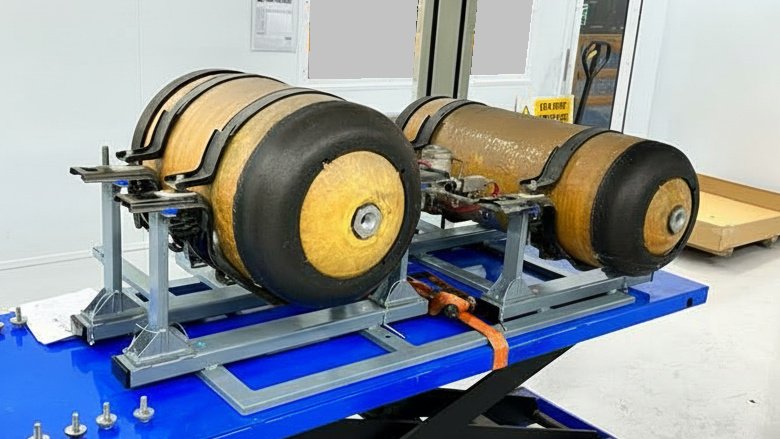
Course overview:
This course is for managers of workshops, fleet depots and companies that service hydrogen vehicles, whether you are planning an investment or already running day-to-day operations. We map out the risks of hydrogen, turn the legal requirements (MKiŚ (Ministry of Climate and Environment), the draft hydrogen legislation, and guidelines from UDT (Office of Technical Inspection), UTK (Office of Rail Transport) and CNBOP (Scientific and Research Centre for Fire Protection)) into specific duties, and prepare an investment and upgrade plan for your workshop or service centre.
We show you how to design ATEX zones, ventilation, detection and safety procedures, create operating checklists (refuelling, HV/H₂ inspections) and walk through the complete service workflow, from vehicle check-in to documenting repairs. Finally, we set out the qualifications and training that managers, mechanics, workplace first aiders and drivers need so that your organisation can service hydrogen vehicles legally and safely.
On this course:
- identify the key risk scenarios for a hydrogen fleet and workshop, and how to reduce them
- organise your safety procedures (LOTO, evacuation, leak response) so they meet current standards and UDT/CNBOP guidelines
- set operating standards for a hydrogen fleet: refuelling, storage, HV/H₂ inspections and safety checklists for drivers and service staff
- draw up an investment and upgrade plan for a workshop, fleet depot or service centre: Ex zones, detection, ventilation, equipment and a schedule of acceptance inspections, whether you are building from scratch or adapting existing facilities
- plan training and qualification paths for managers, mechanics and emergency staff so you can service hydrogen vehicles legally
Course outline:
- Hydrogen as the fuel of the future: an introductory module on the properties of hydrogen and the safety requirements that follow from them.
- Hydrogen vehicles: construction and hazards. The key powertrain components and the critical points when assessing the risk to users and the workshop.
- The legal basis you need to know to service hydrogen vehicles:
- How to turn MKiŚ (Ministry of Climate and Environment) regulations, the draft hydrogen legislation and the Polish Hydrogen Strategy into investment, operating and documentation requirements.
- Requirements of UDT (Office of Technical Inspection), UTK (Office of Rail Transport), CNBOP (Scientific and Research Centre for Fire Protection) and the labour inspectorate: which instructions, inspections and certificates you need before acceptance inspections and during operation.
- How to keep track of changes in the law and plan further adjustments for the workshop, fleet depot and subcontractors.
- Workshop technical requirements:
- Requirements for a dedicated workshop area for hydrogen vehicles, including the construction of walls, ceilings and doors and the required fire resistance classes.
- Ventilation parameters and integrating H₂ detection systems with alarms and control systems.
- Classifying hazardous areas to the relevant standards and selecting Ex-rated lighting and equipment.
- Electrostatic discharge, earthing and equipping the bay for hydrogen defuelling from the vehicle's system.
- Correct signage.
- Safety and health and safety:
- H₂ sensors and alarm and evacuation systems: how to maintain and test them.
- Fire extinguishers and water-based systems that withstand secondary explosions.
- Safety procedures for a system leak, fire or accident, and during bodywork and paint repairs.
- LOTO (lockout/tagout) procedures for H₂ and high-voltage systems.
- Documentation: reports on sensor inspections, ventilation tests and leak tests.
- Service procedures:
- Vehicle check-in: assessing its condition and checking the manufacturer documentation.
- Isolating the high-voltage supply and disconnecting the H₂ source.
- Checking the H₂ system for leaks.
- Repairs using non-sparking tools and antistatic clothing.
- Completing the work: leak test, alarm system reset, entry in the service log.
- Required staff qualifications and training: what each of these roles needs:
- Workshop manager
- Mechanics and diagnostic technicians
- Workplace first aiders
- Hydrogen vehicle drivers and other staff
Requirements:
- there are no special requirements for this course
Price (excl. VAT):
- 2800 PLN
KFS funding (National Training Fund): usually 70-90% of the price of in-person and online courses
You can get funding from the Krajowy Fundusz Szkoleniowy (National Training Fund, KFS for short) through your Powiatowy Urząd Pracy (PUP, the local job centre). It is open to employers, their employees and contractors, and to self-employed people with no staff. The condition is that contributions to the Fundusz Pracy (Labour Fund) have been paid for at least 6 months before you apply (or that you are exempt from paying them by law).
To get funding, call the Powiatowy Urząd Pracy for the area where your business is registered (list of district labour offices in Poland) and find out:
- whether KFS funding is available (and if not, when it can be expected)
- whether there is an approximate amount available per employee
- how to get the funding
- by when the course must take place
- by when the quote and the application must be submitted
The funding application must be filled in and sent online, from an account on the praca.gov.pl portal. Our quote must be attached to it. Once you have sent all the documents, we suggest calling the office to ask when it will decide on your application. If the application is approved, you will be told by email or someone will phone you (this depends on the job centre).
Once your application has been approved, just give us a call: we will confirm the date and the details of the course.
BUR funding (Development Services Database): usually 50-80% of the price of in-person and online courses
Funding is available in every province for micro, small and medium-sized businesses and their employees, and for private individuals, when they sign up for a course through the Baza Usług Rozwojowych (BUR).
If you already have a BUR account, you can go straight to the search page and sign up for the course you have chosen.
If not, you will find some helpful information below.
Each province (or, more precisely, its operator) decides for itself who can get funding, how much and when it accepts applications, but there is a general procedure to follow.
- Go to the funding section of the BUR website and, under "Programy regionalne" (regional programmes), choose the province where your company is registered or, if you are a private individual, where you study or live.
- Find the operator for your area, call them and ask how to get funding. You will certainly need to:
- sign an agreement with the regional operator,
- create an account in the BUR.
- Sign up for the course through the BUR, quoting the "ID Wsparcia" (support ID) number agreed with the operator.
- If the course you are interested in is not scheduled in the BUR, call us on (+48) 510 566 088 and tell us which course you would like to sign up for. We will set a course date and schedule it in the BUR.
Anyone who meets the conditions set by the operator in their province can get funding, until the regional operators run out of the EU funds allocated to them.
The content is tailored to the needs of each group.
The topic, content, scope, individual parts and format of this course are protected by copyright under the Polish Act of 4 February 1994 on Copyright and Related Rights (ustawa o prawie autorskim i prawach pokrewnych, Dz. U. Nr 24 poz. 83).
Upcoming courses
No courses scheduled.